
Push Rod Function and Failure in Heavy Equipment Diesel Engines
- seoapiuser
- 2026-07-30
- 1
A push rod is a small, unglamorous part that carries an outsized responsibility inside a diesel engine's valve train. On Caterpillar and Volvo machines working long shifts under heavy load, a single bent push rod can throw off valve timing, cut engine power, and eventually stall a job site. Operators searching for push rod replacement or a bent push rod diagnosis usually already suspect something is wrong. This guide answers the questions that come up most, from what the part actually does to how to judge if yours needs swapping.
What Does a Push Rod Do in a Diesel Engine?
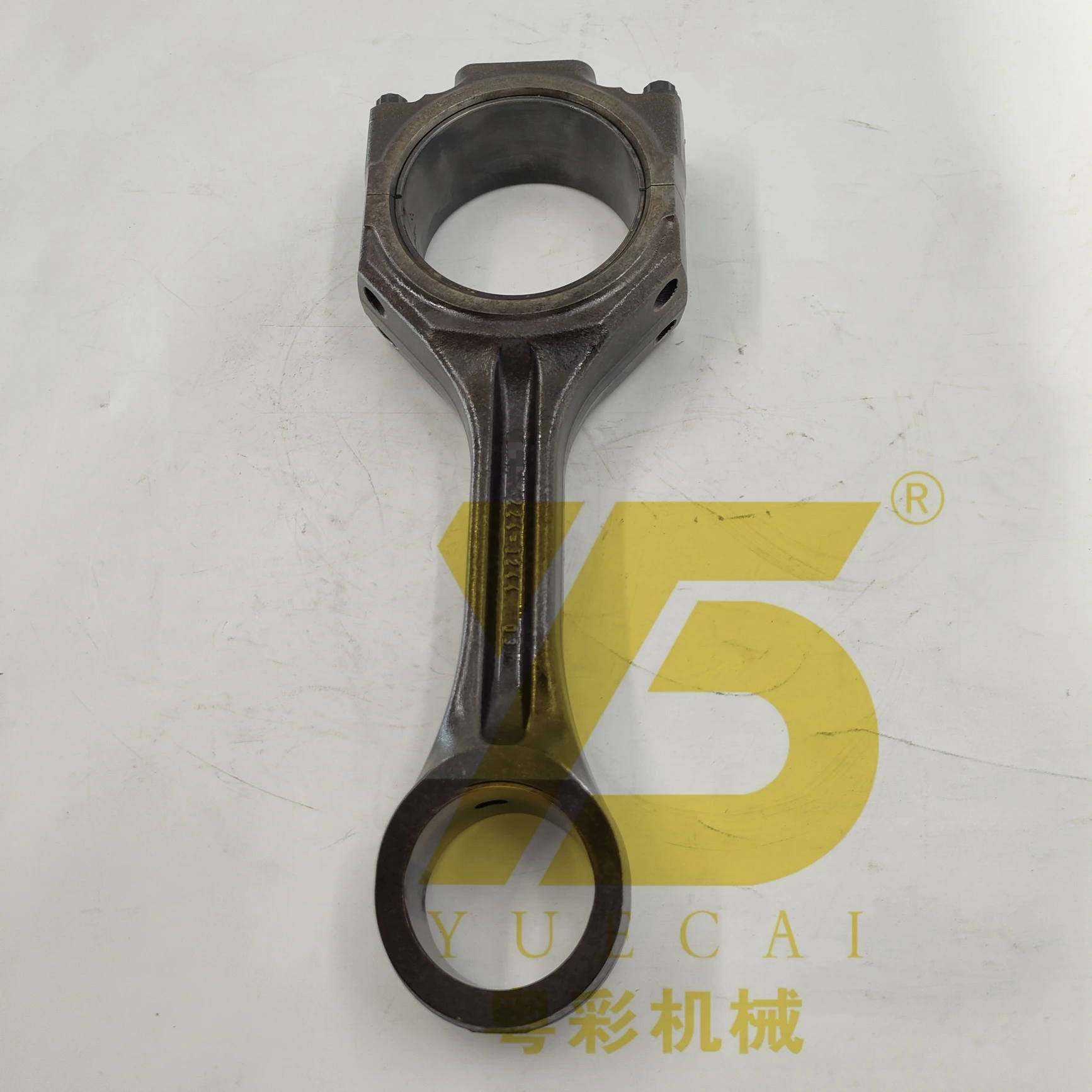
A push rod transfers mechanical motion from the camshaft to the rocker arm, usually through a lifter or tappet, which then opens and closes the intake or exhaust valve. Think of it as a rigid messenger: the camshaft lobe pushes one end, the rod stays straight under that force, and the rocker arm pivots to move the valve. If the rod flexes instead of staying rigid, that motion arrives late or incomplete, and valve timing drifts out of spec.
Why Do Push Rods Bend or Break?
Most failures trace back to one of three causes:
- Valve sticking or a lifter failing to move freely, which stalls the rod's motion while the camshaft keeps turning
- Incorrect valve lash, over-revving, or valve train interference, which can overload the rod
- Manufacturing defects or fatigue after extended service hours
Heat cycling also plays a role. Repeated hot-cold cycles on machines running continuous shifts gradually reduce a metal part's margin against fatigue, making it less able to absorb sudden load spikes.
How Can You Tell a Push Rod Has Failed?
The clearest sign is a sudden change in engine sound, often described as a tapping or clicking noise from the cylinder head that gets louder with RPM. Rough idle, a noticeable drop in power, or a cylinder misfire under load are also common. On some engines, inspection under the valve cover will reveal a bent rod or abnormal valve movement, while a compression test may show one cylinder reading lower if a valve is not opening or closing correctly.
How Much Does Push Rod Replacement Cost?
Cost depends heavily on machine model, region, and whether the shop needs to remove the valve cover or go deeper into the valve train to reach the part. Because parts pricing and labor rates vary widely by dealer network and country, it is worth requesting a quote from your equipment dealer or parts supplier rather than relying on a fixed figure. A single push rod itself is often a low-cost item; the bulk of the bill usually comes from diagnostic time and labor.
Can a Bent Push Rod Damage Other Engine Components?
Yes, and this is why quick diagnosis matters. A bent rod that keeps running can hammer the rocker arm, wear related valve train parts unevenly, or in worse cases indicate an underlying issue elsewhere in the valve train. Catching the noise early and shutting the machine down for inspection is almost always cheaper than waiting for a secondary failure to surface elsewhere.
How to Choose the Right Replacement Push Rod
Match the part number to your specific engine model rather than assuming interchangeability across similar displacement engines, since even engines from the same manufacturer family can use different rod lengths or tip geometries. A few practical checks:
| Factor | Why It Matters |
|---|---|
| Rod length | Wrong length changes valve lash and valve train geometry |
| Tip style (ball vs. cup) | Must match rocker arm and lifter design |
| Material spec | Affects fatigue resistance under repeated load |
For us, supporting Caterpillar and Volvo engine components has meant building a technical process around exactly this kind of compatibility check, so operators are not guessing at part numbers under time pressure.
A worn or bent push rod rarely fails without warning. The tapping noise, the power dip, the rough idle: these are the engine telling you the valve train is out of sync before something bigger breaks. Treating a push rod issue as routine maintenance, rather than an emergency repair, is what keeps a heavy machine on schedule instead of parked on the job site.
Related Blogs
-

Infrastructure Boom Drives Global Surge in Excavator Parts Demand
-
The Future Trajectory of the Excavator Industry: A Glimpse into the Upcoming Trends
-
The Future of Excavation: How Technology and Sustainability Are Reshaping the Industry
-
Optimize Excavator Output with a Durable and Intelligent Engine Controller System
-
Smart Excavator Engine Controller Upgrades for Better Control and Machine Stability

Give Us What You Need
SUBSCRIBE
INQUIRY